
My Story

I Was Never Very Good at Being Normal
I grew up on a dairy goat farm in Luray, Virginia. I spent much of my childhood outside, surrounded by animals, wandering through the woods, following whatever caught my curiosity, and learning in ways that rarely had anything to do with a classroom.
I was always wild, definitely weird, and unquestionably the black sheep. I often felt as though the people around me wanted me to become a more acceptable version of myself—quieter, easier, more conventional. But I have never been especially good at pretending something makes sense simply because everyone else has agreed not to question it.
School and I did not get along very well. It was not because I hated learning. I loved learning. I hated being told what I had to learn, when I had to learn it, how I had to learn it, and how someone else would decide whether I had learned it correctly. Eventually, I dropped out of high school, earned my GED, and found my own way through college, where I studied psychology.
I still enjoy telling people that I am a doctor who never graduated from high school. It tends to confuse them.
That pattern—questioning the system, leaving the prescribed path, and finding another way—would repeat itself throughout my life. I just did not know it yet.
After college, I took a job as a psychiatric technician in a state psychiatric hospital. My work involved helping patients eat, shower, take their medications, attend groups, stay safe, and make it through ordinary life inside a locked unit. But mostly, I spent time with them.
I listened.
And the more I listened, the less psychiatry made sense to me.
I Went to Medical School Because I Hated Doctors
When I tell people that I went to medical school because I hated doctors, they usually laugh.
I am not really joking.
As a psychiatric technician, I spent hours with people whose lives had been shaped by childhood abuse, neglect, violence, grief, addiction, poverty, and trauma. I heard the stories behind the symptoms. Their depression made sense. Their anxiety made sense. Even the voices some of them heard often made sense in the context of what they had survived.
Then the psychiatrists would arrive for rounds. They might spend a minute or two asking whether a patient was hearing voices, feeling suicidal, or sleeping. Based on that brief exchange, they would often increase the medication and move on.
Most patients did not want those medications, and I did not blame them. I watched people gain enormous amounts of weight, sleep through their days, develop movement disorders, lose motivation, lose their sex drive, feel mentally foggy, and describe themselves as emotionally numb. Some were forced to take drugs they desperately did not want.
The entire framework troubled me. There was no blood test, brain scan, biopsy, or other objective physical evidence proving that someone had one of these so-called mental illnesses. Psychiatry grouped symptoms together, gave the collection a name, and then treated that name as though it explained the cause.
If a person walked into a hospital coughing, we would not diagnose them with Coughing Disorder. We would investigate why they were coughing. Was it asthma? Pneumonia? A virus? Lung cancer? The cough would be a clue, not the explanation.
I could not understand why psychiatry treated depression, anxiety, or hearing voices so differently. Why were we naming the reaction instead of examining what had happened to the person?
At first, I assumed I must be missing something. I was only a psychiatric technician. The doctors had years of education and impressive letters after their names. Surely they knew something I did not.
So I decided to become one of them.
I got into medical school and showed up with a pink mohawk, which probably should have warned everyone that I was not planning to become a conventional doctor. I completed medical school, psychiatry residency, and two fellowships at Columbia University. I wanted to understand psychiatry from the inside, and I wanted the credibility to speak openly about what I believed was wrong with it.
Without an M.D. after my name, I was another psych tech with an opinion.
With one, people might listen.
Eventually, they did.
I Thought I Had Found the Answer
Medical training did not convince me that psychiatry was right. If anything, it confirmed that the questions I had started asking as a psychiatric technician were worth asking.
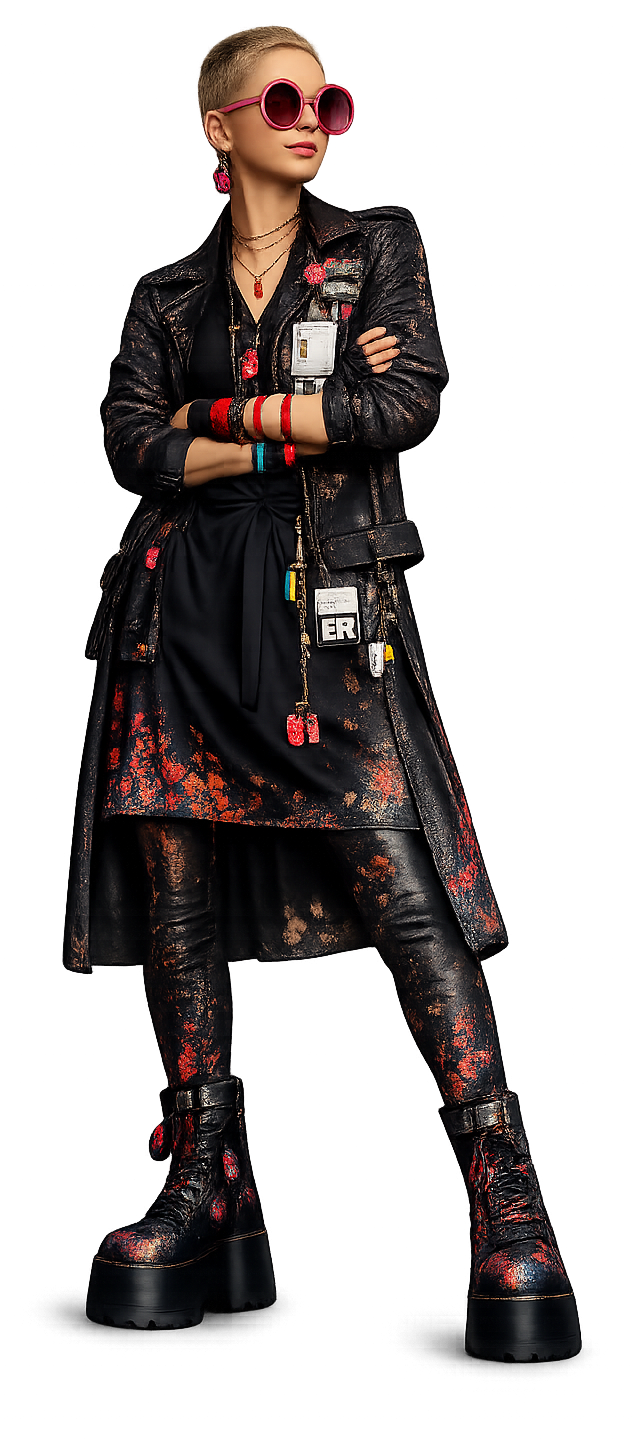
I eventually became Assistant Director of the Columbia University Psychiatric Emergency Room, where I supervised residents and medical students and cared for people during some of the most difficult moments of their lives. I loved parts of that work. I loved the intensity of the emergency room, the teaching, the problem-solving, and the strange privilege of meeting someone on what was often the worst day of their life and sometimes being able to help.
But I never loved psychiatry itself.
I worked as close to the edge of the system as I could without getting fired. I prescribed fewer medications, discharged patients whom others might have admitted, and tried to understand what was happening in the context of their actual lives. I even created a patient well-being program using music, aromatherapy, groups, and other non-medication approaches.
I was trying to create the kind of psychiatry I wished existed.
Then my own health collapsed.
I was having panic attacks, struggling to swallow, physically unwell, taking medication after medication, and becoming increasingly hopeless. At one point, I became suicidal and considered walking into traffic. Instead, I went to see a physician.
During that appointment, I mentioned that I wanted children. I had assumed pregnancy would never be possible for me. She told me that it could be—but that I would need to become healthier and come off the medications.
For the first time, someone gave me hope instead of another prescription.
I quit smoking and drinking, changed my diet, learned about nutrition, prioritized sleep, spent more time outside, reduced stress, and began changing almost every part of how I lived. Over time, I came off almost twenty medications. My panic attacks stopped. My physical symptoms resolved. My mind became clear, and I felt healthier than I had in years.
Then I became pregnant with my daughter through IVF.
When I learned I was pregnant, I heard an unmistakable internal voice from my unborn daughter telling me to quit my job.
So I did.
I left Columbia, moved from New York to Virginia, and while I was still pregnant, I founded a practice called Free Range Psychiatry. I began using the same holistic approach that had transformed my own health to help other people improve their well-being and safely come off psychiatric medications.
At the time, I believed I had finally found the answer.
Success Kept Pulling Me Back In
After my daughter was born, I took maternity leave and experienced a realization that surprised me: I did not want to go back to work.
It was not because I hated my patients. I loved helping people. It was not because the practice was failing. It was growing. I simply wanted to stay home with my baby.
At the time, I was still married, and I dismissed the thought almost as quickly as it appeared. I assumed it was temporary, impractical, or something every new mother felt. I had patients depending on me, a family to support, and a practice I had only recently created.
So I went back.
Over the next several years, Free Range Psychiatry grew far beyond anything I had imagined. People began finding me from across the country and eventually around the world. They had often spent years searching for someone who approached psychiatry the way I did. Many told me I was the first doctor who had ever listened to them. Some told me I was the only person they trusted to help them safely come off psychiatric medications.
There was one problem.
There was only one of me.
That was the reason I created the Free Range Fellowship. It was never about building a bigger business. It was an attempt to solve a problem that felt impossible. If I could train other physicians and nurse practitioners in my approach, then maybe people would no longer have to wait months for an appointment or travel across the country just to find someone who understood what they were looking for.
The Fellowship helped.
But it did not solve the problem.
The emails kept coming.
Every time I thought about slowing down, another message would arrive from someone convinced that I was their last hope. Parents wrote about children they could not help. Adults described years of failed treatments and begged me to see them. People often told me there was no one else.
And I believed them.
That was the strange paradox of developing such a specialized expertise. It was an extraordinary privilege, and I never lacked meaningful work. But it also became a weight I did not know how to put down. I felt responsible for people I had never met. Every decision to take time off, every attempt to work less, every thought about leaving medicine carried the feeling that someone who desperately needed help might not receive it.
From the outside, it looked like success.
From the inside, it felt like obligation.
At the same time, my marriage was deteriorating. We eventually moved to Costa Rica, but changing countries did not repair what was broken. We separated and later divorced.
By 2025, I was a single mother and the primary financial provider for my children. The feeling I had first experienced during maternity leave had never disappeared. If anything, it had become stronger. I did not want another achievement, another interview, another business opportunity, or another level of professional success. I wanted to raise my children. I wanted to cook, clean my own house, go to the beach, take walks, read, write when I felt inspired, and live an ordinary life that actually felt like mine.
But I could not imagine walking away.
I had spent years encouraging people to trust themselves instead of experts.
Somehow, I had become the expert everyone believed they needed.
And every success gave me another reason to stay.
I Couldn’t Heal in a Life That Was Making Me Sick
After the divorce, my physical and emotional health began deteriorating again. I responded by doing more of everything I had spent years recommending to other people.
I changed my diet again. I took more supplements. I exercised, meditated, spent time in nature, prioritized sleep, tried therapy, and attended a psychedelic retreat. I kept searching for the missing nutrient, protocol, practice, or insight that would finally make me feel well.
Nothing worked.
I kept getting worse.
That created an unbearable conflict inside me. I would sit with patients and explain how nutrition, sleep, stress, movement, connection, purpose, and holistic practices could transform their lives. Then I would close my laptop and wonder why those same tools were not transforming mine.
I began to feel like an impostor.
The problem was not that holistic healing had stopped working.
The problem was that I had built a life that required me to carry a burden no person was meant to carry.
For years, I had quietly accepted the belief that because I possessed a rare expertise, I was personally responsible for everyone who needed it. I had convinced myself that if I stepped away, people would suffer. My identity had become inseparable from being the person who could help.
No supplement could fix that.
No meditation practice could fix that.
No amount of self-care could fix a life that no longer belonged to me.
Eventually, I became suicidal for the second time.
That crisis forced me to confront something I had been avoiding for years.
I could not continue living the life I had built.
I had spent years trying to heal myself while leaving the largest source of my suffering untouched. I kept changing my diet, my routines, my supplements, and my mindset while refusing to admit that I no longer wanted the career, the responsibilities, and the identity around which my entire life had been organized.
The problem was not that I needed a better protocol.
The problem was my life.
I had built a career that helped thousands of people.
But I no longer wanted a career.
I wanted a life.
Once I admitted that, I could no longer pretend not to know.
I Finally Gave Myself Permission
I closed the practice I had spent years building and walked away from medicine.
I sold my house, released the professional identity that had defined me for most of my adult life, and let go of many of the expectations, relationships, and ideas about success that had kept me trapped. For a while, I went to Mexico to breathe and recover. Then my children and I moved to Florida and began again.
I lost a great deal in the process. I lost income, status, security, friendships, family relationships, and a version of myself that I had worked very hard to become. There was grief in all of it. Leaving was not a clean, inspirational leap into freedom. It was painful, frightening, and at times profoundly lonely.
But it was also the first time I had fully chosen my own life.
For years, I believed I needed someone to rescue me. Eventually, I realized that I was the man I had been waiting for.
I did not need someone else to give me permission to stop chasing, to stay home with my children, or to choose a life that looked ordinary from the outside. I could create that life myself.
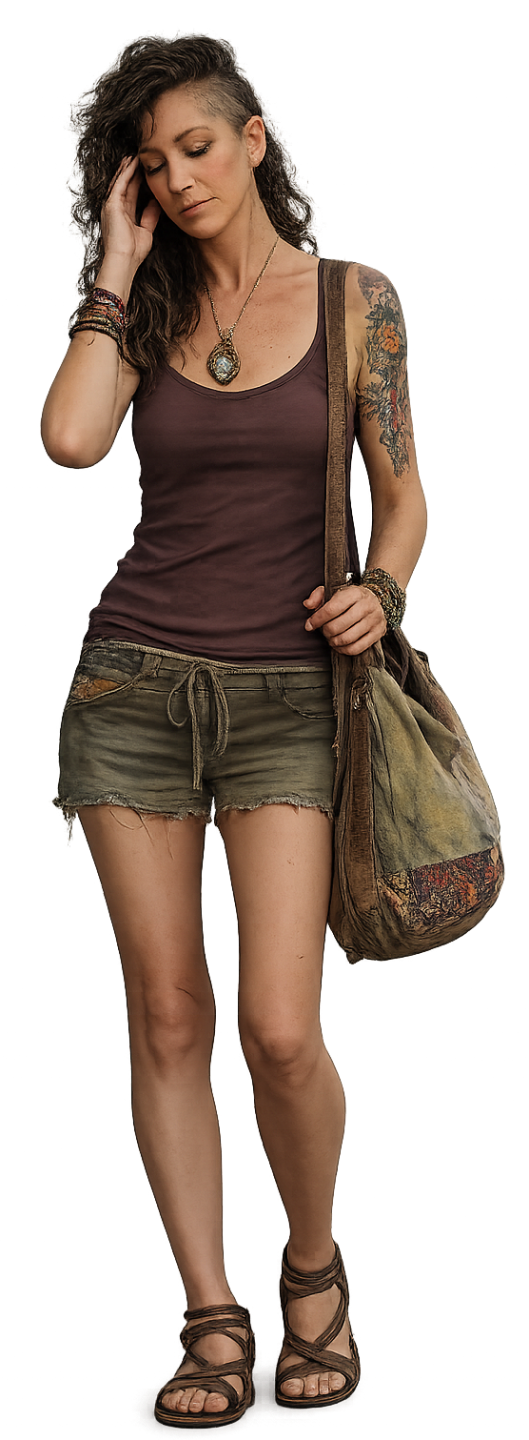
Today, I spend my days raising my children, Maya and Rio. We swim, walk, cook, read, explore, build strange inventions, go to the beach, make messes, clean them up, and follow our curiosity wherever it takes us. I write books when I feel called to write them—not because I need to build another career, but because I have something I want to say.
After years of complicated protocols, I now take almost nothing besides magnesium. My physical health is good. My mental health is good. Most importantly, my life finally feels like my own.
I do not know what I will create next. I may write twenty books. I may dance. I may paint. I may change my mind completely.
That is the point.
I am finally free to find out.
Why I’m Sharing My Story
For much of my life, I questioned psychiatry. Now I find myself questioning almost everything.
Why do we assume children need school in order to learn? Why do we define success by productivity, income, and status? Why do we trust authority figures more than our own observations? Why do we keep trying to fix ourselves when sometimes the real problem is the life we have been told to accept?
My books are where I explore those questions.
Some are about medicine and healing. Some are about motherhood, childhood, education, freedom, and what happens when we stop living according to other people’s expectations. Most of them are deeply personal because I do not know how to write about ideas without also writing about the life that taught them to me.
I am not sharing my story because I believe everyone should make the same choices I made. I do not expect everyone to agree with me, and I would be disappointed if they did.
My goal is not to teach you what to think.
It is to remind you that you are allowed to think for yourself.
You are allowed to question the diagnosis, the school system, the career, the relationship, the definition of success, or the life everyone insists you should be grateful to have. You are allowed to ask whether there might be another way.
And sometimes, asking that question changes everything.
Welcome. I think you are going to feel right at home.

Unleash Your Wild Self
Your life doesn't have to look like everyone else's.
Join thousands of readers exploring freedom, motherhood, healing, and a different way of living.
